


Supporting Late Night Lunch at Leeds United Elland Road
On April 22nd industry operators across the nation visited the home of Leeds United to celebrate late night leisure. The networking event mixed distributors and brands with bar owners, pubs and clubs operators, and entertainment spaces.
The event underpinned a fundraising effort to support the amazing work by the Tim Bacon Foundation. The entry ticket, raffle and silent auction all contributed to the charity – as well as the generous sponsors, Global Brands and NDML. The event included a study tour, exploring the top nightlife venues across Leeds city centre.
Late Night Lunch always feature great guest speakers each year. This year included multiple talks, but retired the annual speech from Peter Marks. Instead we saw a panel of key northern operators and brands, as well as a debrief from the NTIA’s Mike Kill. Mark Shorting from Epic Bars was the keynote speaker who delivered answers on how to manage multiple sites and his worries around minimum wage.

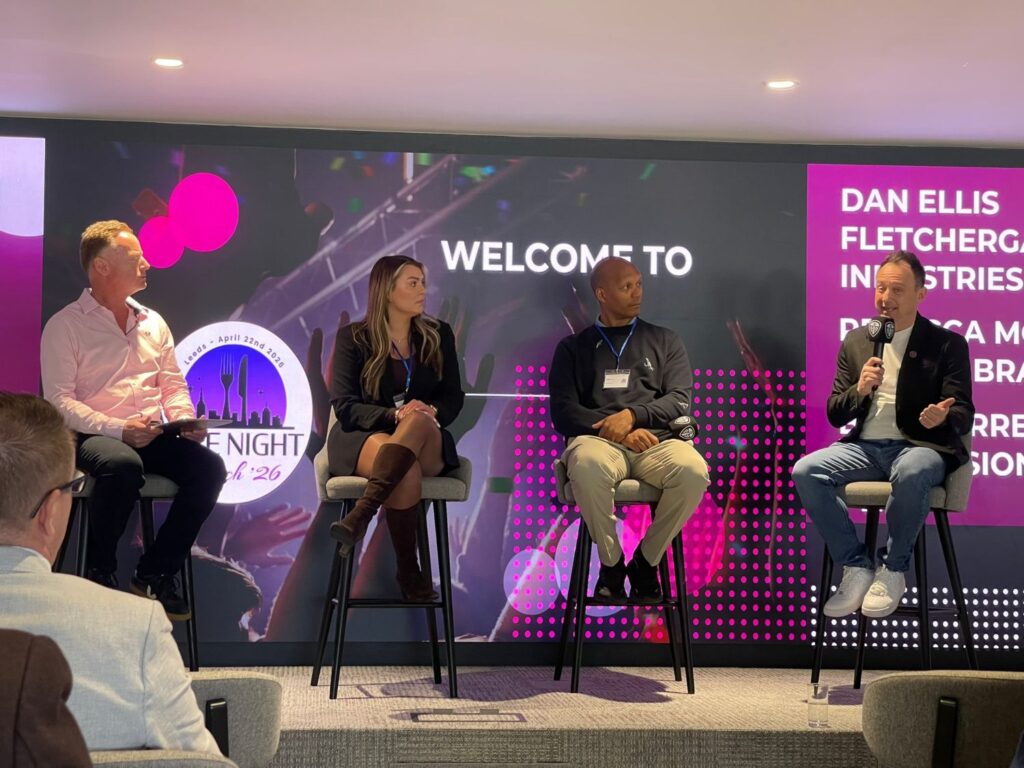
The main takeaways from Late Night Lunch 2026
Speakers: Dan Ellis from Fletchergate Industries in Nottingham, Rebecca Mottershaw from Global Brands and Ben Warren from Professionals at Play who own Roxy venues and King Pins.
The first question posed to the panel was on business growth:
Dan – We are not growing at the moment, hampered by the state of the industry and the economy. We are more focussed on preservation. More and more people are living paycheck to paycheck, spending less, which has an impact for us, especially when we running multiple venues.
The speaker moved on to consumer attitudes and how late night is changing:
Ben – It’s visibly changing. Friday night is not the same as it once was. The consumer economy has changed with a stronger focus on weekend trade. Everything has moved to Saturdays, rolling over from what was midweek custom. More and more people working from home, and not being in the office on Fridays means the city centre is quiet. But I wouldn’t see this as a baseline to build off, because the sector is constantly evolving.
Dan – A factor changing customer attitudes is technology. Technology is making people stay at home and be able to socialise. So to diversify, venues should look into brunches and day gigs – this is where we are finding lots of success. Even so, getting Saturaday’s wrong can be disastrous.
Ben – For us, pay weekend is the biggest spend. We operate via bookings and online sales, which both shoot up after pay day at the end of the month.
Rebecca – Social media is such a driver, and it’s making people selective about where they want togo. Knowing your audience is key for businesses. Also, venues need to engage with their customer sin order to create content. This way they will give your brand love, and love your brand.
Ben – Being relevant is so important. We had a period where our marketing team would follow trends. We try to show what a night out in Roxy looks like. And then we work closely with brands in order to elevate experiences. For example Budweiser is sponsoring the world cup this year – so that’s an easy win for us.
They were asked what can done to increase support for venues:
Ben – Challenge local MPs. The budget was a big disappointment. And yet it’s strange because whenever there is a new development, the council always want a restaurant or club to underpin in it. Late night leisure is essential for regeneration.
Dan – We expect to receive no support from Nottinghamshire Councils. That will only change when politics changes.
Rebecca – We support venues by working closely with them, learning how we can help them increase sales and marketing new products. We’ve launched Hooch Peach which is brand new. We’ve found students go out later and predrink for longer at home, therefore we’ve been focussing on off-trade. Mini shots are big at the moment, and are an excellent return on investment. VKs are our best seller – everyone has a favourite flavour.
What are you working on at the moment?:
Dan – Survival! It’s not a time for growth, we are conserving our cash. Every customer is a content creator, so they are our marketing tool. Snapchat has location and everyone takes photos. The customers do all our marketing for us. No is a great time to do a deal with your landlord. It’s a good time for startups because there are deal to be done.
Ben – We are working on hospitality innovation. And we still find that word of mouth is the best promotion. If you’ve got a good product, the word will spread, and people will come.
Rebecca – I’d recommend venues improve their photos and engage customers. Do more than just a social post. Businesses need very good content teams with very clever individuals who can post something new every single day.

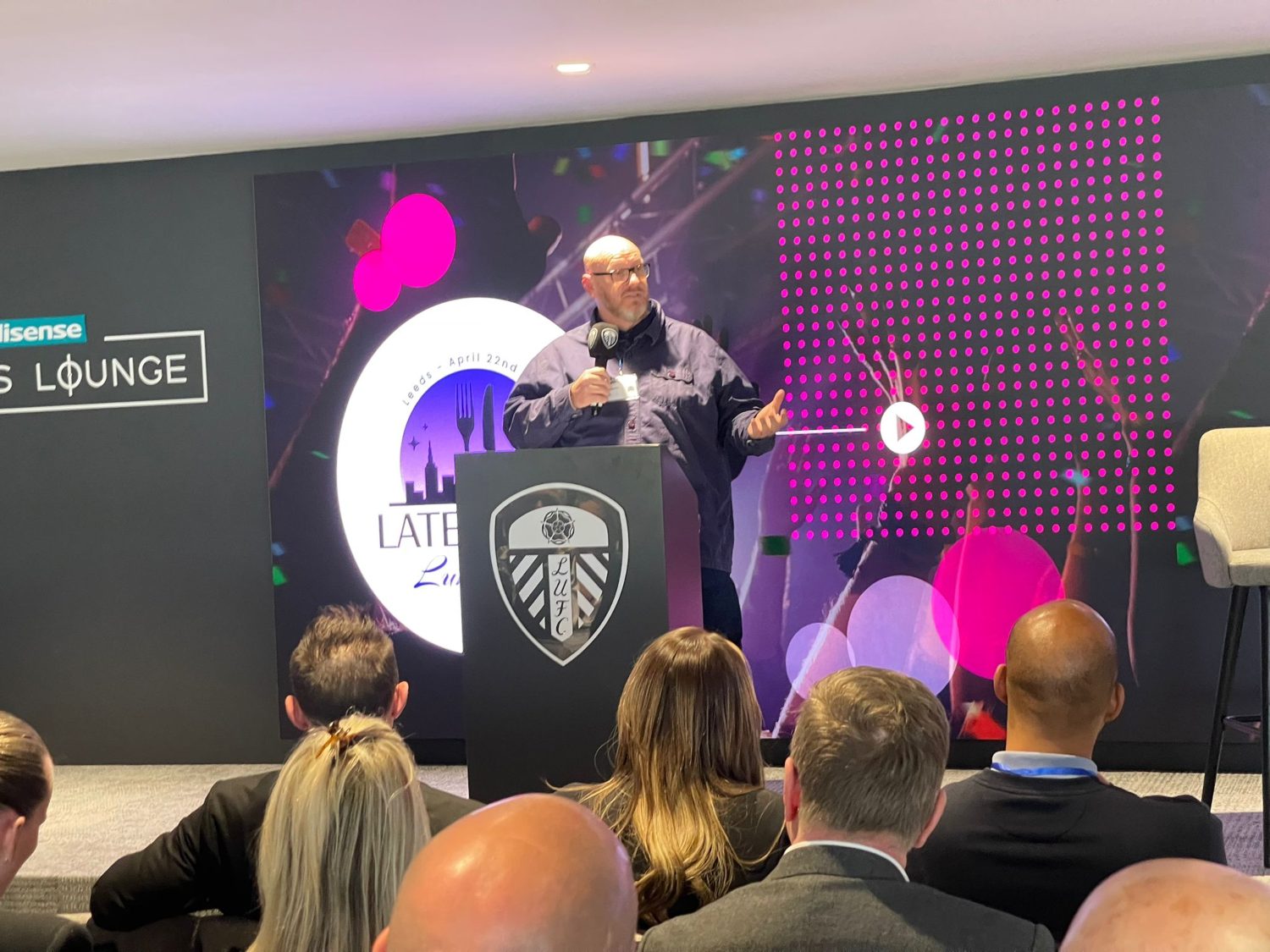
Mike Kill from the NTIA was asked to speak at the Late Night Lunch 2026
Mike emphasized the importance of the local elections on the 7th May, he expects to see a big shake up. Mike would like to see regime change, which he believe is necessary for the welfare of the sector, and the economy.
He says Rachel Reeves had a vision to empower local councils. But with too many strategies, and the division between extreme left and extreme right, all plans are being lost.
Businesses are busy but there is no margin available, so no profit and no growth. Policy shifts are coming up, with Martyn’s law and business rates changes on the horizon. Taxation and the cost of operation are causing an unbearable build up of financial pressures – says Mike.
Transport was a big sticking point for Mike. He wants late night travel to be both safe and affordable, which will greatly benefit late night leisure business. He sees the pre-midnight market booming at the moment; certainly outperforming the post-midnight trade. Older generations are coming back to clubs, preferring earlier nights out. High-tech experiences are gaining popularity with the youth, and yet no phones allowed campaigns are also gaining traction.
Mike says the North has seen the biggest growth, with cocktail bars, themed bars and competitive socialising venues seeing unprecedented development. His tip to venue owners is to diversify, find success through a multi-channel strategy. He is confident that the next generation, currently 16 year olds and up, are more engaged and primed to take on the night.
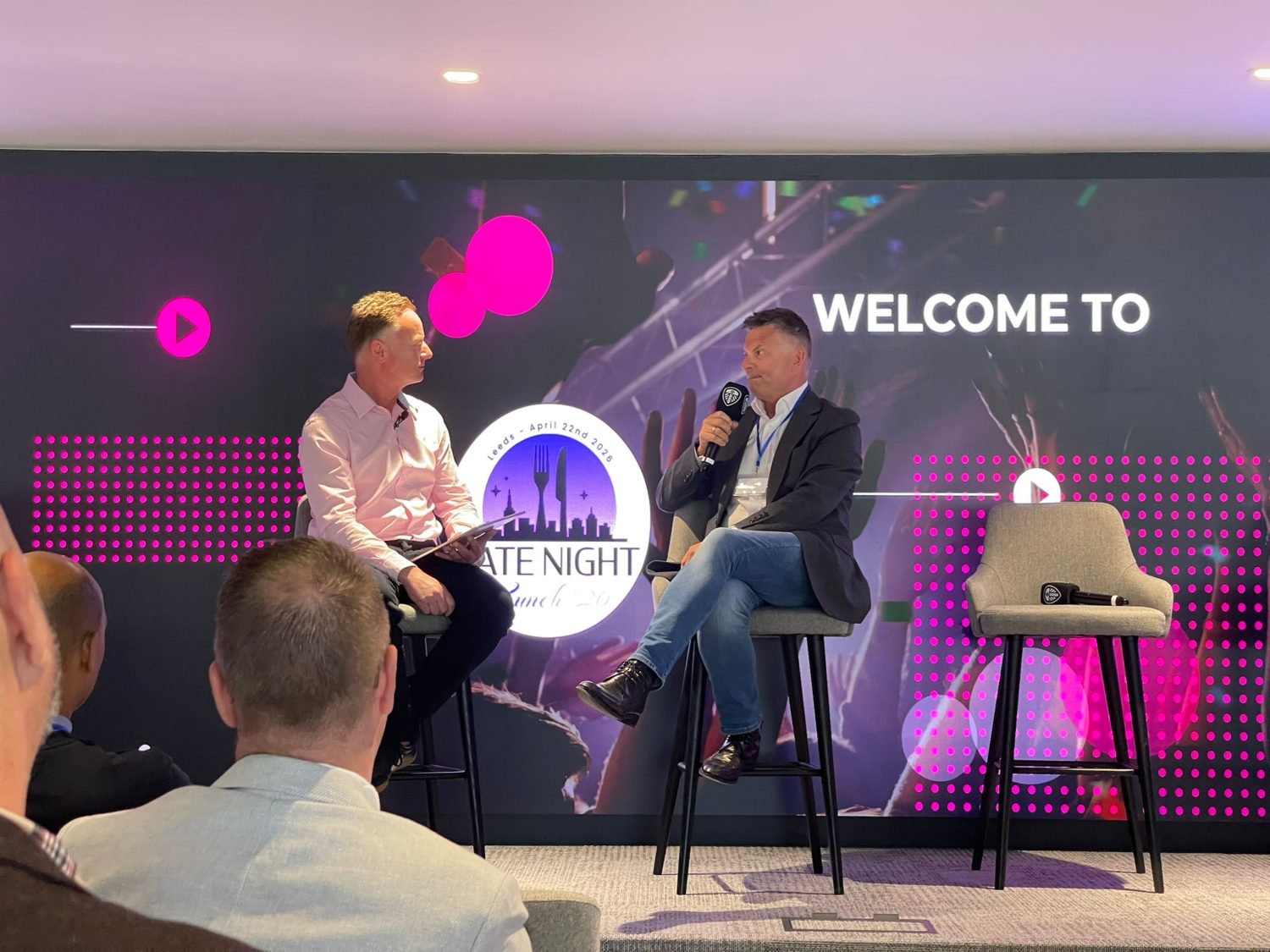
Mark Shorting, CEO of Epic Bars was the keynote speaker at Late Night Lunch 2026
Mark has been a longtime operator within the nightlife and leisure sector, previously owning Fever bars which he sold to Stonegate in January 2019. Fever Bars established their first site in 2007; Mark Shorting has seen it all, and now aims to be the owner of the UKs largest chain of nightclubs and bars. With Fever he had upto 32 sites – now with Epic he has almost 21 operating sites, but is hoping to get to 25.
Mark was firstly asked: What is your biggest regret?
Mark – Not understanding that not all sites work. Whether its because of private landlords or bad leases, some sites are bad from the off. On the other hand, sites you think had no chance can still make money.
How is the consumer market at the moment?
Mark – I would say it’s very bad. The whole culture has changed. People are frightened to go out at night – whether that’s because of fake news, Ai; everyone feels safer staying indoors. Businesses are struggling, there are no good policies and government isn’t supportive – The whole scene feels negative.
We need to remember, hospitality is most people’s first job. Its wear the nation’s youth learn the importance of respect, service and how to operate in a workplace. But clubs can’t afford 18 year olds anymore. Minimum wage is too much, too close to the 21 year olds who are better and more accustomed to work. 18 year olds are being priced out of jobs, and then when they are eventually in work when they are older, they’ll be terribly inequipped.
How is business at the moment?
Mark – I think this sector is similar to a ski resort. If the weathers good, people will ski, no matter the price. But when it’s not, its no good chasing what’s isn’t there.
Day events are a huge success for us. We have 9 events every Saturday afternoon – but you can’t do an ABBA party every week. COVID brought an anti-clubbing culture, a missed generation, but 17 year olds are our future.
Venues need to do new things to stay relevant. There’s bingo in clubs, day parties, competitive socialising: all becoming the new norm. Daytime is the new Friday nighttime.
What would you ask from Rachel Reeves?
Mark – I want the government to put controls on the 24 hour news cycle which is so damaging for our industry. VAT and business rates need to go, they are flawed. Which should place more onus on corporation tax instead. How can local pubs get a larger discount than clubs, at 15%, what’s the distinction?
But because of the economic climate, landlords are keen to do a deal. Now is the time to grow a startup. It’s good practice to start in a recession, it is do-able, but it teaches how to keep your costs down. The trick is to keep costs down, even when you are doing well.
A good product in a busy town is always going to do well. Nightclub owners don’t have to reinvent the town, although we have tried to do that, it is possible, but it’s a big risk. “People go where people are.”
Mark was then asked by a member of the audience, made up of operators and venue owners – Should there be a collective move from Nightlife Businesses to cooperate and push Friday Nights?
Mark agreed if every operator worked together, and all pushed a certain night, then surely this would impact consumer trends.
Mark – Hospitality is the best business to be in, I still love it. It can be frustrating, constantly relating hospitality to work, and thinking we should be making more money if it wasn’t for Government policy. We must realise it’s happening all over the country, London pubs are losing business on Fridays with everyone working from home.
Without a village pub, is it a village? – Hospitality is a necessity. Councillors seem to have forgotten that, and that they too once used to go to clubs.